Sunday, August 9, 2009

Excitement on streets of Ghana ahead of Obama's visit

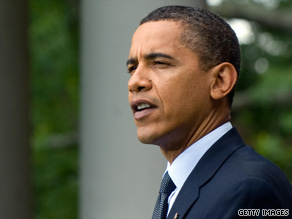
CNN) -- A street vendor in Ghana's capital sells small American flags with an image of President Obama on them, in front of a billboard that proclaims "Akwaaba" -- or "Welcome" -- next to a smiling image of the U.S. leader.

President Obama says he chose Ghana partly because of the "democratic commitments" by President Mills.
When Obama arrives in Accra on Friday night, he will be the third sitting American president to visit the West African nation of Ghana. But unlike Presidents Bill Clinton and George W. Bush, Obama is only visiting Ghana and no other country in the continent.
President Obama says he chose Ghana partly because of the "democratic commitments" by President Mills.Obama said he picked Ghana as the first African country he would visit as U.S. president partly because of the "democratic commitments" demonstrated by President John Atta Mills, who took office in January after a close election.
"By traveling to Ghana, we hope to highlight the effective governance that they have in place," Obama said Tuesday in an interview with AllAfrica.com.
During his 24-hour visit to Ghana, Obama will meet with the president and address parliament before he and first lady Michelle Obama tour the Cape Coast Castle, which was used in the trans-Atlantic slave trade.
Security has been tight all week in Accra, and Ghana plans to deploy some 10,000 security forces during Obama's visit, according to Ghana News Agency (GNA).
The White House has set up SMS codes to allow people across Africa to send "words of welcome" via text message to Obama during his visit. Obama has already received thousands of messages, and plans to answer several of the questions sent to him, the British Broadcasting Corporation reported on Thursday.
Bill Clinton was the first U.S. president to visit Ghana, in 1998, as part of a six-nation Africa tour. Obama's predecessor, George W. Bush, stopped there during a four-nation Africa tour during his last year of office that largely focused on U.S. aid programs.
Ghana's government named a road after Bush to recognize his government's contribution towards the country's development.
As the United States' first African-American president, Obama's trip has broader significance as well. Obama's father is from Kenya and he expressed concern about the political situation in that East African nation.
"The political parties [in Kenya] do not seem to be moving into a permanent reconciliation that would allow the country to move forward," Obama told AllAfrica.com. "And Kenya is not alone in some of the problems that we've seen of late, post-election or pre-election."
Many in Kenya were critical of Obama's decision to pick Ghana the first African nation he visited instead of his father's birthplace. During his campaign for president, Obama was hailed by many as a "son of Kenya." Shortly after the White House announced the Ghana trip in May, newspaper headlines in Nairobi asked, "Why Obama Snubbed Kenya." A political cartoon in one Kenyan paper showed Air Force One dropping a note to Kenya's leaders saying, "Get your act together," as it flew over the country.
Obama said he wanted his visit to Africa to mean more than just something to cross off his list as U.S. president.
"I actually thought that it made sense for us to connect a trip to Ghana to a previous trip with the G8 ... to show that Africa is directly connected to our entire foreign policy approach," Obama told AllAfrica.com.
"That it's not some isolated thing where once every term you go visit Africa for a while to check that box, but rather it's an ongoing part of a broader discussion about how we move many of these international challenges forward."
As Ghana gears up for the visit, a group of local singers and rap artists wrote a welcome song for Obama and produced a music video on YouTube.
"President Obama, Welcome to Ghana," they sing, with images of U.S. and Ghanaian flags interspersed between the musicians. "We welcome you to the Land of Gold."

Saturday, August 8, 2009

Group of 8 Is Not Enough, Say Those Wanting In

L’AQUILA, Italy — The idea at first was simple power politics. Economic troubles prompted the most powerful democracies to convene a summit meeting to determine the course of the world, or at least as much of it as they could.
It worked well enough that they did it again the next year. And the next. More countries joined, and more began banging on the door. Eventually, the so-called Group of 8 started what might be considered auxiliary clubs. And that was how they ended up with a meeting on Thursday that was actually dubbed the G-8 + 5 + 1 + 5. Seriously.
The group’s 35th gathering is such a sprawling event that the leaders of about 40 countries traveled here for it. No longer can just eight powers drive every decision. President Obama headed one meeting with 17 leaders for what he called a Major Economies Forum because there would be no point grappling with climate change without, say, China and India.
So whither the Group of 8 in a Group of 20 world? What relevance does the Group of 8 have when it seemingly cannot take landmark action without enlisting others? Does it make sense for thousands of officials, diplomats, lobbyists, public relations people and journalists to descend on a single overwhelmed town each year when maybe a simple videoconference call might do? Or if it is still meaningful, then does it have the right membership in a changing world?
“Look at the amount of effort, of carbon, of cost that went into this,” said Kumi Naidoo of South Africa, co-chairman of the Global Call to Action Against Poverty, an advocacy organization, looking at the large tents set up for the news media, complete with air-conditioning, wireless Internet and land lines.
“The G-8 is an elite cocktail, a self-appointed group,” he added. “I think it’s an anachronism, and consistently undermining the work of other multilateral initiatives.”
These are questions that come up every year, but more so lately as economic and political power shifts. The Group of 20, which includes the eight and an array of nations from Argentina to Indonesia to Turkey, has emerged in recent months as a potent forum addressing the global recession.
President George W. Bush summoned the Group of 20 leaders to Washington in November to figure out how to revive the world economy. Mr. Obama joined the group when it met in London in April and invited it to meet again in September in Pittsburgh.
As a first-time Group of 8 participant, Mr. Obama seems to have a skeptical eye, uncertain about its suitability as a vehicle for solving the world’s problems. This year’s meeting produced statements on the economy, Iran, the Middle East and other topics but made few breakthroughs, and Mr. Obama’s aides cast it as a mere way station between Group of 20 meetings.
“We view this meeting and this discussion as a midpoint between the London G-20 summit and the Pittsburgh G-20 summit,” said Mike Froman, the president’s chief negotiator, or “sherpa.”
Indeed, Mr. Obama concluded that it was pointless to talk about climate change among just the eight powers, so he invited nine others Thursday. Developing countries like China and India agreed to make “meaningful” reductions in greenhouse gases but refused to accept the specific targets for 2050 sought by the United States and Europe.
Mr. Obama cast that as victory enough, until discussions resume at the Group of 20. “We’ve made a good start,” he said, “but I am the first one to acknowledge that progress on this issue will not be easy.”
The developing countries of the Group of 20 say the days of the smaller club are numbered. “The G-8 is over as a political decision group,” Celso Amorim, Brazil’s foreign minister, said last month at a conference in Paris. It “represents nothing at all,” he said, adding that “you simply can’t ignore emerging countries such as Brazil, China or India.”
Still, talk of restructuring or scrapping the Group of 8 invariably runs into resistance from current members. At a news conference on opening night, Prime Minister Silvio Berlusconi of Italy, the host, said the summit meeting was “ideal for building confidence and cordiality, for creating friendships and deepening friendships.” He added, “We call each other by our first names and not our last names” and gather “at the same informal table.”
There is no doubt Italy pulled off a tour de force of last-minute organization, spending $75 million to transform a police training complex in an earthquake zone into an Olympic-style village, complete with high-quality espresso bars and wicker lawn sets. Cooks are preparing 25,000 meals over three days, and 3,700 journalists registered to attend.
It is a far cry from the original meeting outside Paris in 1975, when leaders of the United States, Britain, France, Germany, Italy and Japan inaugurated the Group of 6. Canada joined two years later, and it became the Group of 7, an organization without organization — no headquarters, no bylaws, no staff, just a rotating leadership to hold the annual meeting.
President Bill Clinton got Russia admitted in 1997, and others started attending as observers. By this year, there was a regular meeting with China, India, Brazil, Mexico and South Africa, now dubbed the Group of 5.
Mr. Berlusconi also invited Egypt, so the secondary meeting became known as the G-8 + 5 + 1. Then there was a working lunch with international organizations called the G-8 + 5 + 1 + 5. Given that China’s president, Hu Jintao, abruptly left to deal with rioting at home, perhaps it should have been called the G-8 + 5 + 1 + 5 — 1.
Then there is breakfast on Friday with African leaders. All told, roughly 40 countries representing 90 percent of the world economy sent leaders to L’Aquila. But that has risks of its own; a president never knows whom he might run into. Mr. Obama found himself shaking hands on Thursday with Col. Muammar el-Qaddafi of Libya.
Robert C. Fauver, who was Mr. Clinton’s sherpa, agreed that the Group of 8 could be redefined, but noted that has complications too. “If you’re trying to negotiate an exchange rate deal with 20 countries or a bailout of Mexico, as in the early Clinton days, with 20 countries that’s not easy,” he said. “If you get above 10, it just makes it too darn hard to get things done.”
Attending his 21st summit meeting, John Kirton, director of the Group of 8 Research Group at the University of Toronto, said the group would evolve with additional formats involving more countries. But he said the core eight still represented unrivaled political and economic power and had the duty to weigh in on issues of democracy that others could not.
“There’s a lot that the eight can do that the others can’t,” he said. “You’ll always need the G-8.”

Friday, August 7, 2009

Obama Visit to Highlight Ghana Democracy

As Ghana prepares for Friday's arrival of U.S. President Barack Obama, President John Atta Mills says the visit highlights Ghana's democratic credentials.

Members of the Ghanaian group Friends of Obama ride through the streets of the capital on the back of a truck, handing out t-shirts and encouraging people to come out and cheer the American president when he arrives late Friday.

"From the speeches that he was giving, we realized that there was something about this man. That was the 'Yes We Can' spirit," said Friends of Obama organizer Nancy Sam. "He has brought hope to the world. And wherever there is peace, he is coming. Because when you look at African countries, Ghana is one of the peaceful countries. And this tells us that wherever there is peace, President Obama is going there. And with that 'Yes We Can' attitude and speech that he has given, it has motivated us."

President Obama says he chose Ghana as his first stop in Sub-Saharan Africa because he wants to highlight stable countries that are governed well, where leadership is accountable to the people and institutions are stronger than any one person.

President John Atta Mills won election earlier this year in a hard-fought, closely-contested vote that saw the ruling party peacefully concede defeat. President Mills says Ghana is a democratic example that President Obama wants to highlight for the rest of Africa.

"This is the second time in our history that one civilian government has handed over peacefully to another, and I believe that this is something that he wants to commend," President Mills said. "The second one also is our democratic credentials. I believe that this is something that he admires. And he wants to seize the opportunity to send out positive signals - especially to our brothers and sisters in Africa - that this is the way to go."

In an interview with VOA, President Mills says all Ghanaians can be proud that America's first black president chose their nation for his first stop in Sub-Saharan Africa.

"Who in Africa does not want an opportunity to meet President Obama? I am sure there are people who are coming in from our neighboring countries, some I believe from as far as even South Africa. Everyone wants to see him because he is a hero. We regard his coming as a homecoming," the president said.

University student Idrissa Karim says President Obama's visit shows that Ghana is on the right path.

"Considering all the African nations, Barack Obama could not choose any other African nation but Ghana. It tells us how democracy is prevailing, how rule of law is working in Ghana," Karim said.

President Obama meets with President Mills Friday evening before a Saturday breakfast where they will be joined by former Ghanaian leaders John Kufuor and Jerry Rawlings. Mr. Obama is scheduled to give a speech at the international conference center before he and his family visit Cape Coast Castle, from where slaves were shipped across the Atlantic for nearly 300 years.  

Thursday, August 6, 2009

President Barack Obama signs first U.S. climate pact at G-8 meeting

President Obama and leaders of the world's biggest industrialized nations agreed Wednesday to turn down the heat on the planet by going green.
The G-8 nations, whose leaders are meeting in Italy, will seek to cut half of all emissions linked to climate change by 2050.
The agreement calls for halting the world's average temperature from rising 3.6 degrees Fahrenheit above current levels by switching to green-energy sources, such as wind and solar power.
It was a landmark move for the U.S., which for decades has resisted joining in on a global climate-change pact. The final accord is expected to be negotiated during a December meeting in Denmark.
The hard part may be convincing emerging industrial powers like China and India to reduce their use of fossil fuels, as well as getting poor countries to embrace green-energy sources to develop their economies.
The leaders also opened the possibility of pumping more cash into the economy, pledging to "take, individually and collectively, the necessary steps to return the global economy to a strong, stable and sustainable growth path."
And they unanimously expressed "serious concern" about Iran's harsh crackdown on postelection protesters.
Meanwhile, the White House announced that Obama will host leaders from nearly 30 countries in March 2010 for a summit on securing nuclear materials and battling atomic smuggling.

Wednesday, August 5, 2009

OBAMA AGENDA: GOING GREEN -- OR NOT?

"President Obama and leaders of the world's biggest industrialized nations agreed Wednesday to turn down the heat on the planet by going green," The New York Daily News writes. "The G-8 nations, whose leaders are meeting in Italy, will seek to cut half of all emissions linked to climate change by 2050."


Video: President Obama is in Italy, where key meetings on the global economy and other international issues are under way. NBC’s Savannah Guthrie reports.

But according to the New York Times, “The world’s biggest developing nations, led by China and India, refused Wednesday to commit to specific goals for slashing heat-trapping gases by 2050, undercutting the drive to build a global consensus by the end of this year to reverse the threat of climate change.” 

Brazil's "Silva gave Obama, a big sports fan, an autographed yellow Brazilian soccer jersey at the start of their morning meeting at the G-8 summit in Italy," the AP reports. "In their banter, which reporters partly heard through a translator, Silva spoke animatedly of the June 28 soccer match between the U.S. and Brazilian national teams in the Confederations Cup series. The game was a crushing loss for the underdog Americans, who led at the midway point, 2-0, only to lose 3-2. Silva repeatedly said, 'Yes we can.'"
"Scandalo! President Obama touched off a controversy in Italy yesterday just by praising the integrity of one of his hosts," the New York Post writes. "Arriving at the G8 summit, Obama heaped unusually lavish praise on President Giorgio Napolitano, who holds a figurehead post -- rather than compliment scandal-plagued Prime Minister Silvio Berlusconi, Italy's real leader."


But that's not what's making headlines in Italy's leading newspapers. Corriere della Sera leads with the G8 and the economy, Obama's praise for Italy's "strong leadership" and the group's condemnation of violence in Iran (as well as a cartoon of a giant Obama holding a miniature Berlusconi with little Berlusconi saying "In palma di mano," or "In the palm of hand"). La Repubblica leads with the G8's decision to cap warming by 2 degrees Celsius.

Tuesday, August 4, 2009

Obama Issues Veto Threat in Name of National Security

President Obama issued his second-ever veto threat late Wednesday. The Statement of Administration Policy, released by OMB as per usual, cites executive privilege and national security interests in the administration’s desire NOT to allow the expansion of the current “Gang of Eight” lawmakers who are to be notified of covert operations.
Key part of OMB release: 
“Unfortunately, section 321 (Report on Covert Actions) undermines this fundamental compact between the Congress and the President as embodied in Title V of the National Security Act regarding the reporting of sensitive intelligence matters – an arrangement that for decades has balanced congressional oversight responsibilities with the President’s responsibility to protect sensitive national security information…If the final bill presented to the President contains this provision, the President's senior advisors would recommend a veto.” 
FULL SAP:
EXECUTIVE OFFICE OF THE PRESIDENT
OFFICE OF MANAGEMENT AND BUDGET
WASHINGTON, D.C. 20503
                                                                                                                                                                                           July 8, 2009
                                                                                                                                                                                           (House Rules)
STATEMENT OF ADMINISTRATION POLICY
H.R. 2701 – Intelligence Authorization Act for Fiscal Year 2010
(Rep. Reyes, D-Texas)
The Administration supports House passage of an Intelligence Authorization Act for FY 2010 that would support the Intelligence Community (IC) and the Community’s mission to conduct intelligence activities to protect the Nation.  The Administration appreciates the House Permanent Select Committee on Intelligence's inclusion in H.R. 2701 of many provisions submitted by the Administration. 
Although the Administration is pleased with the many favorable provisions in the bill, the Administration has serious concerns with a number of provisions that would impede the smooth and efficient functioning of the IC and that would raise a number of policy, management, legal, and constitutional concerns.  The Administration looks forward to working with the Congress to address these concerns, some of which are outlined below, in order to enhance the effectiveness and capabilities of the IC on behalf of the Nation.
While the Administration appreciates the funding authorized for critical intelligence programs as described in the classified schedule, it has serious concerns with certain funding reductions and other matters in the classified schedule that will be addressed separately by the Administration.
Report on Covert Actions (Section 321).  The Administration strongly objects to section 321, which would replace the current “Gang of 8” notification procedures on covert activities.  There is a long tradition spanning decades of comity between the branches regarding intelligence matters, and the Administration has emphasized the importance of providing timely and complete congressional notification, and using “Gang of 8” limitations only to meet extraordinary circumstances affecting the vital interests of the United States.  Unfortunately, section 321 undermines this fundamental compact between the Congress and the President as embodied in Title V of the National Security Act regarding the reporting of sensitive intelligence matters – an arrangement that for decades has balanced congressional oversight responsibilities with the President’s responsibility to protect sensitive national security information.  Section 321 would run afoul of tradition by restricting an important established means by which the President protects the most sensitive intelligence activities that are carried out in the Nation's vital national security interests.  In addition, the section raises serious constitutional concerns by amending sections 501-503 of the National Security Act of 1947 in ways that would raise significant executive privilege concerns by purporting to require the disclosure of internal Executive branch legal advice and deliberations.  Administrations of both political parties have long recognized the importance of protecting the confidentiality of the Executive Branch's legal advice and deliberations.  If the final bill presented to the President contains this provision, the President's senior advisors would recommend a veto.  
Increased Presidentially Appointed and Senate Confirmed (PAS) positions (Sections 424, 426, and 427).  H.R. 2701 creates five new PAS positions.  Consistent with the 9/11 Commission’s recommendations, the Administration believes that if these provisions were to become law, critical national security positions would remain unfilled for significant periods of time and create disruption across the IC.  Further while the Administration agrees in concept to the establishment of Inspectors General, the Administration would want to work closely with the Congress to harmonize any new roles and responsibilities of a new Inspector General of the National Security Agency with those of the Inspector General of the Department of Defense. 
Prohibiting the Implementation of the Defense Civilian Intelligence Personnel System (DCIPS) (Section 304).  The Administration is concerned that section 304 will prevent the IC from transforming itself into a single enterprise that can recruit and retain a competitive workforce to meet national security needs.  The DCIPS is consistent with a broader, long-standing pay-for-performance effort.  In addition, the substantial reduction in funds provided for the IC in transition to pay-for-performance will severely undermine the Administration's efforts to build an intelligence workforce for the 21st century.  
Personnel Ceiling Adjustments (Section 103).  The Administration objects to section 103.  Congressionally imposed personnel ceilings on IC civilian employment are inflexible, force the use of often more expensive contractors, and severely hinder the IC’s civilian joint duty, student employment, and National Intelligence Reserve Corps (NIRC) programs.
Inspector General for the Intelligence Community (Section 406).  The Administration supports the important work undertaken by Inspectors General in serving as watchdogs for transparency, accountability, and efficiency, and would like to work with the Congress on the optimal approach and authorities for carrying out the important functions of Inspectors General in the context of the IC.  Although the Administration supports section 406’s expansion of the protections and limitations of the Intelligence Community Whistleblower Protection Act, the Administration is concerned that the bill as drafted could be understood to constrain the President’s constitutional authority to review and, if appropriate, control disclosure of certain classified information.  Administration officials are working closely with Senate and House staff to craft appropriate whistleblower enhancement protections for intelligence community whistleblowers through separate legislative vehicles, H.R. 1507 and S. 372, and urge that the whistleblower enhancement provision in this bill account for Administration proposals offered in those contexts to address constitutional and other concerns with the current formulation.
GAO Review of Intelligence Community Matters (Section 335).  Section 335 would fundamentally shift the long-standing relationship and information flow between the IC and intelligence committee members and staff.  The Administration has committed to be forthcoming with the committees and to provide access to the information they need to conduct their oversight.  The Administration would welcome the opportunity to more fully address this matter before fundamental changes to the oversight process are legislated.
Reporting Requirements (various sections).  The Administration objects to a number of reporting requirements contained in the bill, such as sections 332, 345, 354, and 366, as well as purportedly in the classified annex.  Section 356 would incorporate by reference all reporting requirements in the classified annex into the act, thereby making them a requirement in law.  The Administration objects to the passage of such substantive secret provisions of law.
Further, such a provision would remove the flexibility that Congress and the Executive branch would otherwise have to modify and adapt provisions in the classified annex to meet changing conditions and requirements without seeking a statutory change from the full Congress.
Prohibition on use of funds to provide Miranda warnings to certain persons outside of the United States (Section 504).  The Administration strongly objects to section 504, prohibiting Miranda warnings abroad, which may take the prosecution option off the table in the United States Government's fight against al Qaeda and its affiliates and deny the government an important tool used by the previous Administration to preserve legal options. Indeed, the practice in the previous Administration had been to provide Miranda warnings to persons outside of the United States, recognizing the value of preserving the option to prosecute terrorists in our system of justice.  The Nation needs at itsdisposal every tool in the national security toolbox, including the ability to bring terrorist prosecutions. 
National Security Information (Section 502).  The Administration objects to this section, which would move the Program Manager for the Information Sharing Environment (PM-ISE) into the Executive Office of the President.  The Administration is still reviewing how to make the PM-ISE most effective and believes such legislation is premature and could create undue administrative and managerial burdens by creating a completely new category of information for agencies to manage. The Administration would like to work with Congress to meet its goals through non-legislative means.

Monday, August 3, 2009

Obama faces a day of ever-expanding meetings

Good morning from the Oval in L'Aquila, Italy, scene of the Group of Eight summit. President Obama is spending his day in bigger and bigger diplomatic sessions here, the only day he begins and ends his day in Italy. He arrived Wednesday morning and will leave for Ghana Friday night after meeting Pope Benedict XVI at the Vatican.
Today's meetings began with a "bilat" -- one-on-one -- with Brazilian President Luiz Inacio Lula da Silva. Highlight: Lula, who said he was inspired by Obama's campaign motto "Yes we can," gave Obama a No. 5 Brazilian yellow soccer jersey, signed by the national team that defeated the U.S. team, 3-2, in last month's Confederation Cup soccer match in Johannesburg. The number carries no significance, Brazilian journalists said.
"Hey, look at this. Beautiful. Alright. Wonderful. I like that," Obama said.
White House spokesman Robert Gibbs said the president closed the meeting by warning Lula that the USA will never relinquish a two-goal lead in soccer again. Lula laughed.

As the day goes on, the meetings will include the original G-8 (United States, Canada, Britain, France, Germany, Italy, Japan and Russia); the G-5 emerging economies (Brazil, China, India, Mexico and South Africa) plus Egypt; six international organizations,including the United Nations, World Bank, International Monetary Fund and World Trade Organization; the "Junior 8," a group of young people ages 14 to 17 from the same countries; and the Major Economies Forum, which includes 17 nations.

The talks will focus on global economics, trade, climate change and agricultural development in Third World countries. Heavy stuff, but hey, these are world leaders, and they can handle it.
First lady Michelle Obama toured the city center of L'Aquila this morning, as the president did on Wednesday, to view repair efforts from the April 6 earthquake that killed nearly 300 people and left more than 50,000 homeless.

Source